Why Ice Cream Startups and Parlors Struggle to Scale When They Partner With the Wrong Ice Cream Cup Manufacturers From the Start
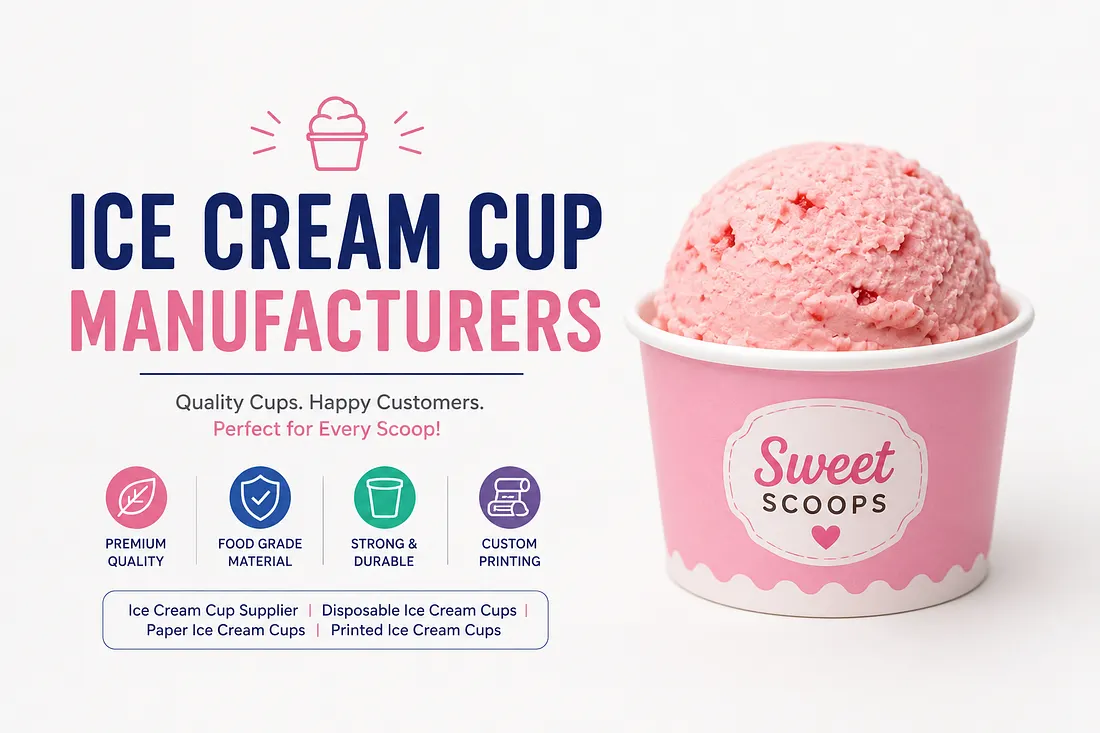
So I was talking to this guy last month who runs three ice cream parlors in his city. Business was doing okay. Good flavors decent footfall loyal customers in all three locations. But he had this problem that was quietly bleeding money and he could not figure out where it was coming from.
Turned out it was the cups.
Not the ice cream. Not the pricing. Not even the location. The disposable ice cream cups he had been sourcing since day one were creating a chain reaction of small problems that compounded every single month. Wrong sizes inconsistent quality printing that looked nothing like what was shown in the sample and a supplier who took four days to even respond to a reorder request.
That conversation stuck with me because I have seen this exact pattern repeat itself more times than I can count over the years working in and around the food business ecosystem.
The Part Nobody Talks About When Starting an Ice Cream Brand
When people plan their ice cream startup they spend weeks on the recipe. They spend days on the logo. They agonize over the parlor interior and the Instagram aesthetics. And then when it comes to the actual cup that holds the product and goes into the customer's hand they just google "ice cream cup supplier" and go with whoever responds first or quotes the lowest price.
That decision right there. That is where a lot of the scaling problems begin.
The cup is not just a container. It is the last physical interaction your brand has with the customer before they experience the product. And in 2024 where people photograph their food before eating it the cup is often the first thing that ends up on social media.
Paper ice cream cups that are flimsy that sweat through on the outside that have printing that looks off-color or blurry, those cups are telling your customer something about your brand whether you intend it or not.
What Actually Happens When You Pick the Wrong Manufacturer Early
Here is the thing about bad partnerships in the packaging supply chain. The damage is not always immediate and visible. It accumulates.
In the first few months you might not notice much. Volumes are low. You are probably hand-checking every batch. The supplier might even be on their best behavior because you are a new account and they want to keep you.
But as you grow things start to show cracks.
You scale up the order and suddenly the quality is not the same as the early batches. The printed ice cream cups that looked sharp in the sample now come in with ink bleed or the brand colors look slightly off. You push for consistency and the supplier either cannot deliver it or starts making excuses.
Lead times get longer. Minimum order quantities become a problem. And the worst part is that by the time you realize this manufacturer is not the right fit you are already deep into it. Your packaging is associated with a certain look. Your shelving and display setups are calibrated around specific cup dimensions. Switching is now a logistics headache not just a business decision.
Disposable Ice Cream Cups and the Quality Problem Nobody Documents
Here is something I want to be honest about because I see it glossed over in most business content.
Not all disposable ice cream cups are made equal. The difference between a cup that holds its shape on a warm day in a crowded parlor and one that collapses after three minutes is the raw material quality and the manufacturing process. And that difference is not visible in a product photo or even always obvious in a small sample batch.
The thickness of the paper. The coating on the inside that prevents moisture from soaking through. The way the seams are sealed at the base. These are the things that matter when your staff is serving fifty customers an hour on a busy Saturday afternoon.
A lot of startups find this out the hard way. They get a beautifully priced quote from an ice cream cup supplier and everything looks good on paper. Then summer hits and the complaints start rolling in. Cups leaking. Cups that do not stack properly so storage becomes a mess. And that is a direct hit on the customer experience that no amount of good ice cream can fully compensate for.
What Scaling Actually Requires From Your Packaging Partner
When you are small the requirements from your supplier are relatively simple. You need product you need it on time and you need it to look decent.
When you start scaling the requirements change completely.
You need a manufacturer who can grow their capacity alongside yours. You need consistent quality batch after batch not just in the samples. You need customization options because as your brand grows you will want your packaging to reflect that. You need an ice cream cup supplier who understands food-grade compliance and can give you the documentation when a new retail partner or franchise prospect asks for it.
You also need someone who actually picks up the phone or responds to messages without a three-day lag.
Most small suppliers who served you well at a hundred units a week cannot serve you at two thousand units a week. And discovering that gap when you are in the middle of peak season is a genuinely painful experience.
What Good Looks Like: The Kind of Manufacturer Worth Staying With
I have been around enough businesses that got this right and got this wrong to have a pretty clear picture of what separates a good manufacturing partner from one that will slow you down.
A good ice cream cup manufacturer is not necessarily the cheapest one. They are the one with the production infrastructure to handle real volume. They have clarity on material specs and they can communicate those specs in plain language. When you ask for printed ice cream cups with a specific Pantone color they come back with actual color proofs not just a promise.
They also have some history. A manufacturer that has been supplying to parlors and food businesses for years has already worked through most of the common problems. They know what fails in hot weather. They know how to keep seam integrity consistent at high run volumes. That experience is something you cannot put a price on when you are scaling.
I have personally seen how companies like Anirudh Agro Industries approach this differently from the typical small-batch supplier. They focus on paper ice cream cups that are built for actual food service conditions not just for looking good in a sample box. That kind of product-first thinking is what a growing brand needs behind it.
The Printed Cup Problem Specifically
Let me talk about printed ice cream cups for a second because this is where I see so much money wasted.
Brands invest real money into their visual identity. They hire designers. They get brand guidelines done. And then they hand that over to a supplier who prints with whatever ink process they use and delivers something that is sort of close to what was intended but not quite right.
The color is a little dull. The logo looks slightly pixelated at the edge. The white spaces bleed into the background slightly.
This matters more than people think. Consistency in printed packaging is a signal. When a franchise prospect or a corporate buyer looks at your cups they are assessing your brand seriousness. A cup that looks slightly off tells them something about your operational standards even if unconsciously.
The better manufacturers use controlled print processes with proper pre-press checks. They do not just run your file and ship. They verify. And over thousands of units that verification shows up as a meaningful difference in the finished product.
A Few Things to Actually Check Before You Commit to a Manufacturer
I am not going to give you a twenty-point checklist because honestly most of that stuff gets ignored. But there are a handful of things that genuinely matter.
- Ask for a factory run sample not just a desktop-printed prototype. A proper sample comes off the actual production line with the actual materials.
- Ask about the coating on the inside of the cup. Food-grade PE coating that prevents moisture seep is standard in quality manufacturers. Not all suppliers use it properly or at the right thickness.
- Ask about lead time at double your current volume. Not your current volume. Double. Because if the answer changes dramatically that tells you something important about their actual capacity.
- And ask what happens when there is a quality issue. A manufacturer who has a clear process for handling defective batches is a manufacturer who has dealt with quality control seriously. One who gets evasive about this is a warning sign.
Working with a supplier like Anirudh Agro Industries who has been in the paper cup manufacturing space long enough to have these processes built in gives you a different starting point than sourcing from a generic trading company who is just moving product from a third-party plant.
The Bigger Picture
Here is what I want to leave you with because I think the actual point of all this gets missed sometimes.
The cup is a small thing. It costs a fraction of what you spend on ingredients or rent or staff. But supply chain decisions compound. A bad packaging partner does not just cost you money in bad batches. It costs you time in chasing orders and resolving complaints. It costs you brand equity in inconsistent presentation. And it costs you growth because you are dealing with operational fires instead of expanding.
The ice cream businesses that scale cleanly are almost always the ones who got their supply chain fundamentals right early. Not perfect. But solid. They picked manufacturers who could grow with them and who cared about the product beyond just getting the invoice paid.
That is the unsexy side of building a food brand. But it is the part that actually determines whether you make it past year three.


Comments
Post a Comment